Flarum tells a returning reader what is new. It says nothing about what moved.
A post you read last week that has since been rewritten sits exactly where it was, with the timestamp it always had, wearing core’s "Edited" label — which says only that it was edited, not that it happened after you had read it. In a thread that settles something — a date, a price, a rule, a decision — that is the difference between having read the thread and knowing what it says.
Since is the missing half, and it runs entirely in the browser on data the page already has.
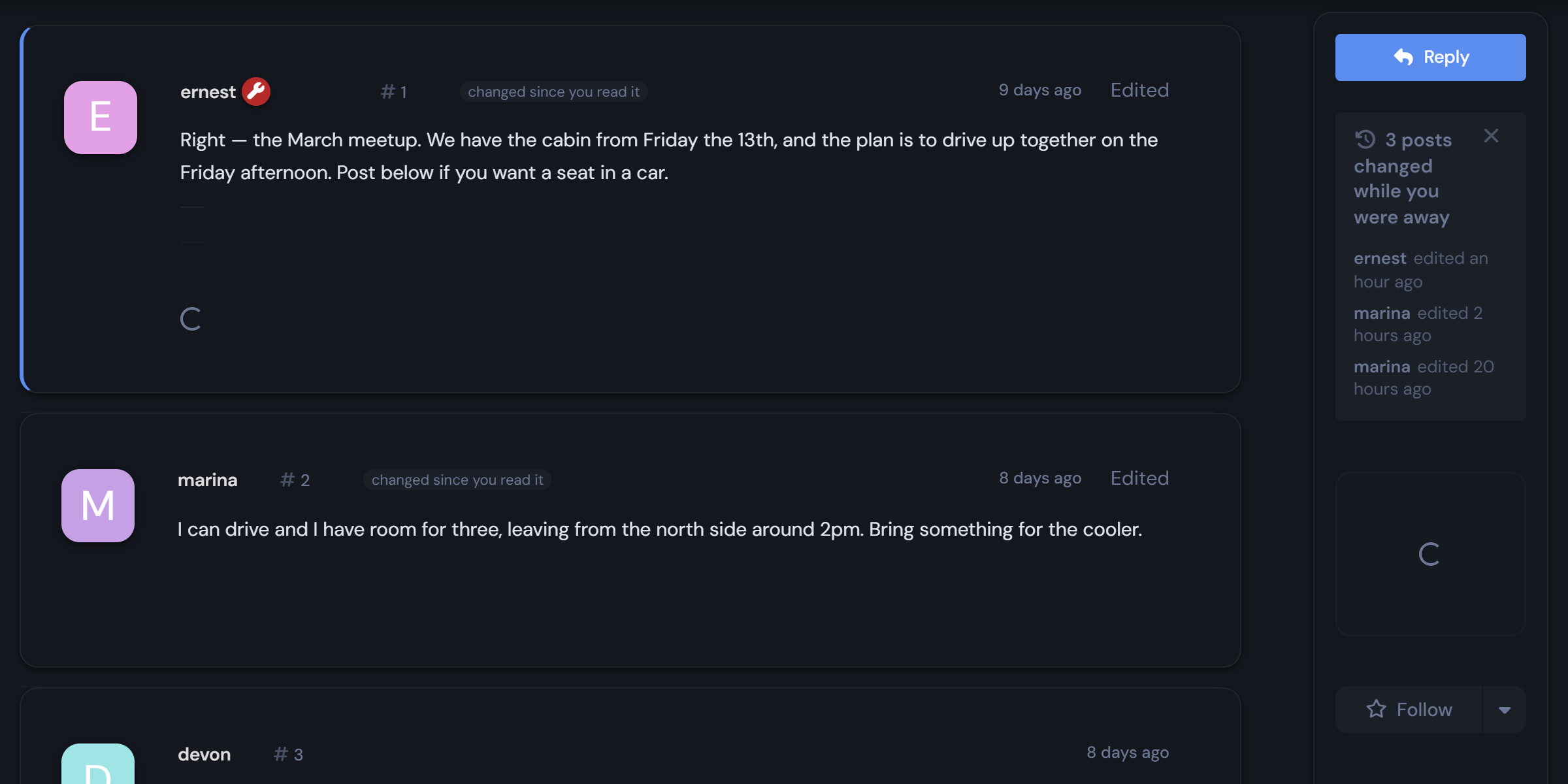
What people get
A strip in the discussion sidebar: who changed what, and when. Each line jumps to that post. It collapses past three and can be dismissed.

And a quiet mark on each post that changed after this reader had already read it:
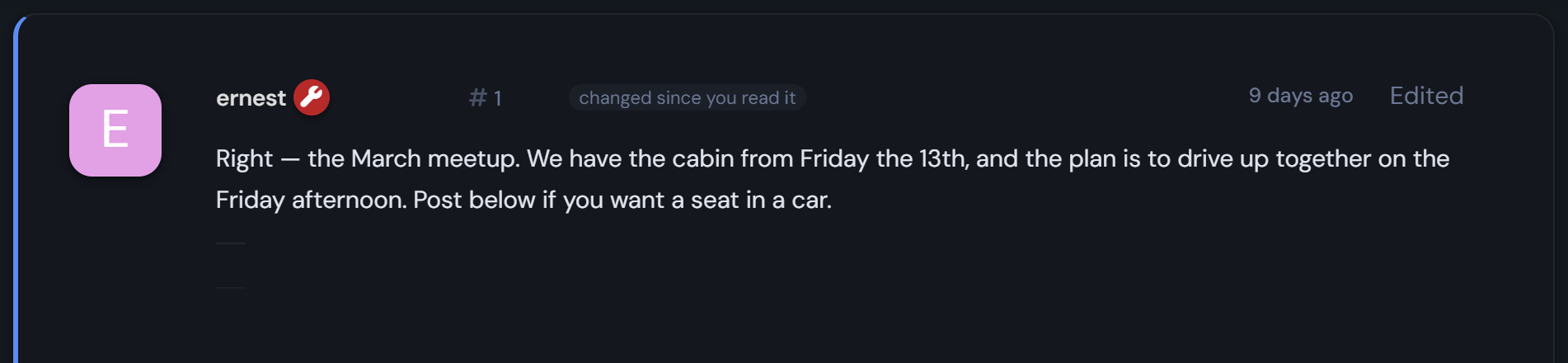
A post only counts if it is at or before the reader’s read mark and was edited after their read time. A post edited before they last looked carries no mark — they saw it; it isn’t news.
How it works
The whole trick is a snapshot. Flarum PATCHes your read state as you scroll, which overwrites the very attributes this compares against — so reading a discussion destroys the record of what you had already read. Since captures the arriving values once per page load and then leaves them alone. A refresh legitimately loses the strip: you have now read those posts.
There is no backend to it. No tables, no settings, no migrations — extend.php registers a stylesheet, a bundle and a locale, and nothing else.
What it deliberately does not do
- Posts in the loaded stream only. It issues no extra requests; a changed post a hundred replies further down and not loaded yet is not in the strip.
- Signed-in members who have read the discussion before. For anybody else the whole thread is new, which core’s unread divider already says better.
- It does not show you the diff. It says a post moved and takes you to it.
Install
composer require ernestdefoe/since
Enable it; there is nothing to configure.
